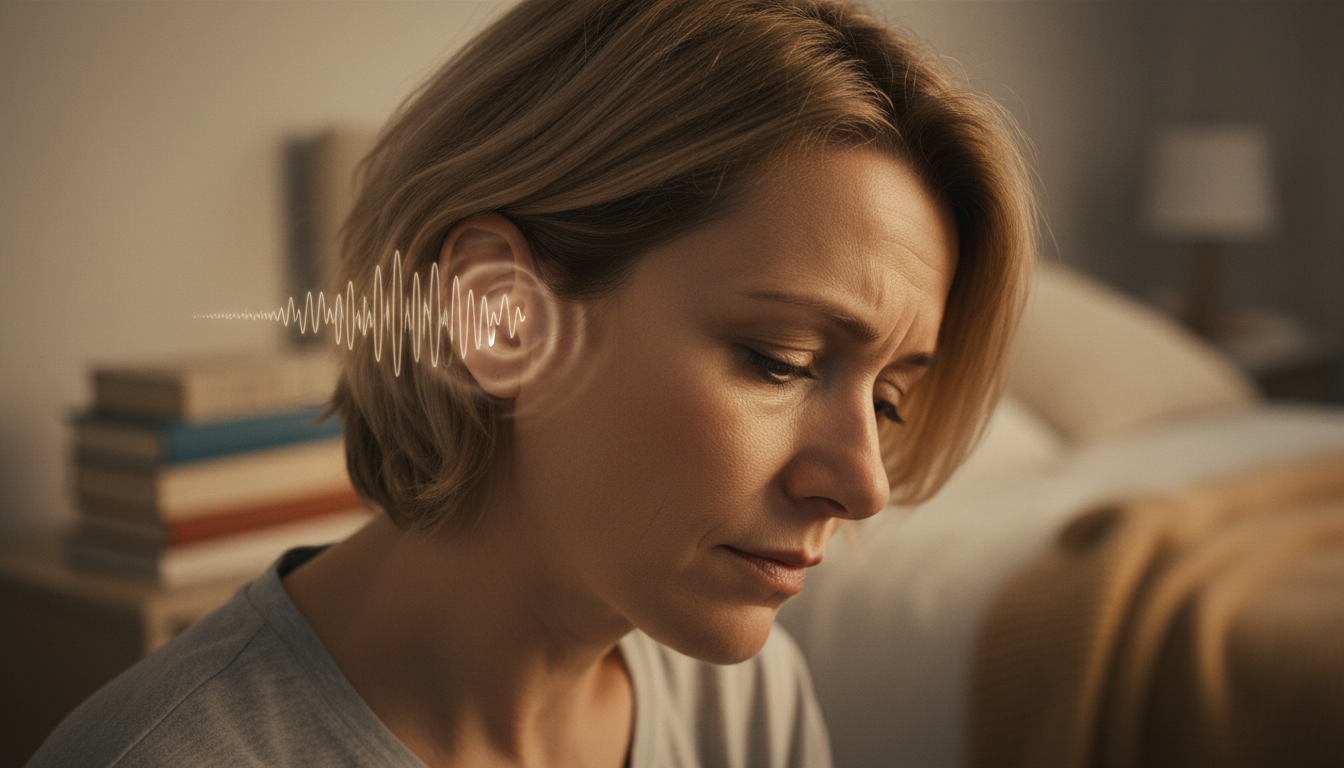
Beyond the Buzz, Ringing, or Hissing: Understanding the Root Causes of Tinnitus
When a persistent sound disrupts your evening, annoying you before bed, interfering with a good book, or interrupting the peace you worked for all day, the urgent question is usually what is the main cause of tinnitus. The short answer is that there is no single cause, but hearing loss is the most frequent starting point. NICE guideline NG155, published in 2020, identifies tinnitus as a symptom that needs assessment in the context of a person’s hearing, medical history and the character of the sound itself.
Tinnitus is the perception of sound without an external source. It may resemble ringing, hissing, humming, clicking or a pulse. The sound is real to the person experiencing it, even when nobody else can hear it. In ENT practice, we see that the useful question is rarely “How do I stop the noise today?” It is “What changed in my ears, hearing or wider health around the time it began?”
Hearing loss is the most common starting point
For most people, what is the main cause of tinnitus leads back to changes in hearing. While tinnitus is most commonly linked to age-related or noise-induced hearing loss, it can also affect people outside these typical groups—many of whom don’t realize they have any hearing loss until it is formally tested. The delicate sensory cells in the cochlea do not regenerate after injury. When they send less reliable information to the brain, the auditory system can increase its internal gain, making background neural activity more noticeable as tinnitus.
The pattern often shows up in daily life rather than a lab test. You might realize you are getting overwhelmed in busy places, constantly straining to catch what people are saying, or finding it increasingly exhausting to follow conversations in a crowded room. The NHS advises attention to hearing changes, especially when tinnitus affects one ear more than the other.
This is where tinnitus causes explained properly become more useful than a generic list. A hearing test can show whether there is a measurable loss, which frequencies are affected and whether both ears follow a similar pattern. We have seen patients focus entirely on the sound itself while a standard audiogram reveals a hearing change they had adapted to without noticing.
Ear conditions can produce a sound and a hearing change
Earwax, middle-ear fluid, an ear infection and a perforated eardrum can all alter sound transmission and bring tinnitus into sharper focus. These causes are often temporary, but they still deserve an examination rather than self-treatment.
Less frequently, conductive hearing loss is linked with otosclerosis, a condition in which abnormal bone remodelling restricts the movement of the stapes bone. Tinnitus can accompany the gradual hearing loss associated with this condition. Our page on otosclerosis symptoms and treatment explains why a hearing test and examination matter before discussing options such as hearing aids or surgery.
Ménière’s disease is another recognised ear condition, typically involving episodes of spinning vertigo, fluctuating hearing loss, ear pressure and tinnitus. The combination matters more than any one symptom. If tinnitus arrives with severe vertigo or a sudden drop in hearing, the timing should be recorded accurately because sudden sensorineural hearing loss needs urgent medical assessment.
Unilateral tinnitus—especially when accompanied by hearing loss in that same ear—can sometimes be a sign of a vestibular schwannoma (a benign tumor on the hearing and balance nerve).
While these non-cancerous growths are generally slow-growing and rare, this specific combination of symptoms makes it essential to get a formal medical assessment to ensure an accurate diagnosis and appropriate care.
Subjective tinnitus usually reflects auditory pathway changes
Subjective tinnitus origins account for the great majority of cases. “Subjective” does not mean imagined; it means the sound is heard only by the affected person. It can arise after hearing loss, but also after a period of intense stress, poor sleep, jaw clenching or certain medications. These factors can amplify awareness of a sound that the brain would otherwise filter out.
Medication reviews need precision. High doses of aspirin, some antibiotics such as gentamicin, loop diuretics and certain chemotherapy medicines are among drugs associated with tinnitus or hearing effects. Do not stop prescribed treatment abruptly. Bring the medicine name, dose and the date the tinnitus started to a GP, pharmacist or ENT appointment so that the risk can be assessed against the reason the medicine was prescribed.
Temporomandibular joint problems are an overlooked example. If the sound changes when you clench your teeth, open your mouth wide or move your neck, the jaw and surrounding muscles may be contributing. Have you noticed the ringing becoming louder after a night of tooth grinding? That detail is clinically useful, not incidental.
Objective tinnitus needs a more targeted examination
Objective tinnitus triggers are uncommon and describe sounds that may sometimes be detected by a clinician during examination. They include muscle contractions in the middle ear or palate and vascular causes. A rhythmic sound that matches your heartbeat is called pulsatile tinnitus and should be assessed, particularly when it is new, persistent or only present on one side.
Blood-flow changes near the ear can create pulsatile tinnitus. High blood pressure, anaemia, thyroid disease and blood-vessel abnormalities are among the possibilities, although the cause varies from person to person. NICE NG155 recommends imaging for certain cases of pulsatile tinnitus because the clinical task is to exclude a treatable structural or vascular issue rather than assume it is routine ringing.
A clicking sound, by contrast, may point towards middle-ear muscle activity or palatal myoclonus. The distinction between clicking, whooshing and a continuous high tone helps direct the assessment. Recording a short note on frequency, side, pulse-synchrony and triggers can make a consultation far more productive.
One-sided symptoms and sudden change should not be ignored
Tinnitus in both ears with a gradual hearing change is common. Tinnitus affecting one ear only, however, warrants a more careful review. The same applies to asymmetric hearing loss, facial weakness, balance problems, persistent ear discharge or a sudden onset of hearing loss. These features do not automatically indicate a serious condition, but they change the investigations that may be appropriate.
Seek urgent medical advice if you develop tinnitus after a head injury, experience sudden hearing loss, or hear a pulse-like sound alongside neurological symptoms. For a broader overview of problems assessed in clinic, see the ENT conditions treated at Borsetto ENT.
A useful assessment looks beyond the sound itself
An ENT assessment usually begins with a history, ear examination and hearing test. The clinician will ask when the tinnitus began, whether it is constant, whether it affects one or both ears, and whether there is dizziness, pain, fullness or hearing difficulty. A 10-minute description that includes these facts is more useful than simply saying the noise is “getting worse”.
There is no benefit in chasing a single universal explanation when tinnitus has several recognised pathways. Identifying hearing loss, ear disease, medication effects, jaw tension or a pulsatile pattern gives you a clearer next step. Before your appointment, write down the exact date of onset, any noise exposure, current medicines and the situations in which the sound changes.